.png)
Full Funnel Marketing — Is It Right For Your Small Business?
Ever feel like you're shouting into the void with your marketing efforts? You're putting in the hours, crafting beautiful ads, and posting consistently on social media, but the leads just aren't… converting? You’re not alone. Many small business owners struggle with this, and it often boils down to one thing: you're not thinking about the entire customer journey. That’s where full funnel marketing comes in.
Okay, so what is full funnel marketing? It’s about understanding that your customer doesn't just magically appear ready to buy. They go through a process. Think of it like dating. You wouldn't propose on the first date, right? (Unless you're going for a reality TV show angle.) Marketing is similar. You need to nurture the relationship, building trust and demonstrating value every step of the way. It means guiding potential customers from the moment they first hear about you to the moment they become loyal, repeat buyers... and even advocates for your brand.
From Awareness to Advocacy: The Full Funnel Marketing Breakdown
Let’s break down those “dates” in marketing terms.
Top of the Funnel (Awareness): This is where potential customers first become aware of your existence. Maybe they see a social media post, find your blog through a search, or even stumble upon your website. The goal here is simple: get noticed. Think engaging content, eye-catching visuals, and maybe even a little bit of humor.
Middle of the Funnel (Consideration and Evaluation): Now that they know you exist, they’re starting to consider whether you’re the right fit for their needs. This is where you showcase your expertise, address their pain points, and offer solutions. Content like case studies, webinars, and detailed product descriptions are your best friends here. Think of it as the "getting to know you" phase. You're showing them you understand their problems and have a solution. One small business owner on Reddit lamented that they struggled with middle-of-funnel content, feeling like they were just constantly selling. The key, as many commenters pointed out, is to educate and inform, not just push products.
Bottom of the Funnel (Conversion): In this stage they're ready to buy (or book, or subscribe, or order) Make the process as smooth and painless as possible. Clear calls to action, easy checkout processes, and compelling offers are crucial. Think limited-time discounts, free trials, and personalized recommendations. Get rid of all the friction, so they can get the sale.
Post-Purchase (Loyalty & Advocacy): The journey doesn’t end at the sale! This is where you turn happy customers into raving fans. Offer excellent customer service, build a community, and reward their loyalty. Think personalized emails, exclusive content, and even referral programs. Getting customers talking about you. This is a great point that came up in a Quora thread – a lot of businesses neglect the post-purchase experience, focusing only on acquiring new customers. But retaining existing customers is often far more cost-effective.
Full Funnel Marketing for Small Businesses: The Benefits
So, why should your small business care about full funnel marketing?
A full funnel marketing approach allows you to:
Attract more qualified leads: By targeting your content to different stages of the funnel, you're attracting people who are genuinely interested in what you have to offer. No more wasting time on unqualified leads!
Increase conversion rates: When you nurture leads through the funnel, they're more likely to convert into paying customers. They feel understood, supported, and confident in their decision.
Build stronger customer relationships: Full funnel marketing isn't just about making a sale; it's about building long-term relationships with your customers. Happy customers are repeat customers, and repeat customers are the lifeblood of any small business.
Improve brand awareness: A well-executed full funnel strategy can help you reach a wider audience and establish your brand as an authority in your industry.
Practical Steps to Full Funnel Marketing Success
Okay, now for the practical stuff. How do you actually implement full funnel marketing? Here are a few steps to get you started:
Map Your Customer Journey: This is crucial. Understand the steps your customers take, from initial awareness to becoming a loyal fan. What are their pain points at each stage? What questions do they have?
Create Content for Each Stage: Develop content that addresses the needs of your customers at each stage of the funnel. Blog posts, social media updates, videos, infographics, ebooks – the possibilities are endless! A lot of online chatter on Reddit focuses on content repurposing. Create one core piece of content and then break it down into smaller pieces for different platforms and funnel stages.
Choose the Right Channels: Where are your ideal customers spending their time online? Focus your efforts on the channels that will reach them most effectively. Don't spread yourself too thin!
Track Your Results: Use analytics to track the performance of your marketing efforts at each stage of the funnel. What's working? What's not? Adjust your strategy accordingly.
Don’t Forget About the Human Element: Automate where you can, but remember to inject personality into your marketing. People connect with people, not robots. Respond to comments and messages personally, and let your brand’s unique voice shine through.
Full Funnel Marketing Mistakes to Avoid
Full funnel marketing is effective, but it’s not foolproof. Here are a few common mistakes to avoid:
Ignoring the Top of the Funnel: Don’t focus solely on sales. You need to attract new leads first! Investing in awareness-building activities is essential for long-term growth.
Not Nurturing Leads: Don’t expect people to buy the moment they hear about you. Nurture them with valuable content and build trust. A common complaint on Quora is that businesses often bombard potential customers with sales pitches too early in the process.
Forgetting About the Bottom of the Funnel: Make the purchase process as easy and seamless as possible. Don’t let potential customers abandon their carts due to unnecessary friction.
Neglecting Post-Purchase: Keep engaging with your customers after the sale. This is crucial for building loyalty and advocacy. One insightful point on Twitter highlighted the importance of post-purchase surveys to gather feedback and identify areas for improvement.
The Top 3 Marketing Funnel Strategies Compared: Flywheel vs Funnel vs Hourglass
There’s more than one way to build a marketing engine. The Flywheel, Funnel, and Hourglass models all approach the customer journey differently, but understanding which one fits your business can save you time, money, and frustration.
1.) The Flywheel Marketing Funnel
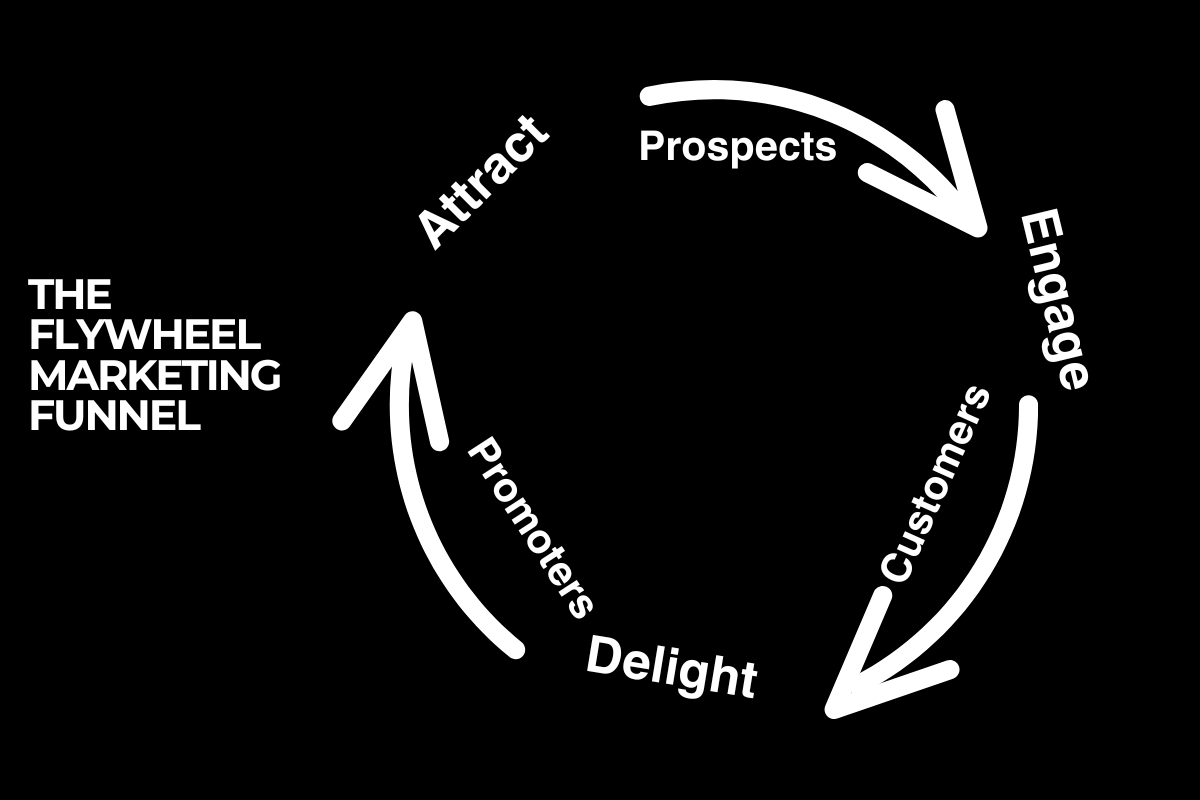
The Flywheel focuses on producing a self-sustaining growth engine by delivering exceptional customer service at each touch point.The Flywheel prioritizes ability to attract customers, reducing points of friction, and accelerating referral networks.
Instead of a linear process, the Flywheel strategy is a circular system where momentum builds as you Attract, Engage, and Delight customers. The idea is that happy customers fuel growth by becoming promoters, driving new leads and creating a positive feedback loop.
Think of it like this: you invest in attracting the right people, provide them with a stellar experience, and they, in turn, become your best marketers. It's all about customer centricity. The faster the flywheel spins, the faster your business grows. And, like a real flywheel, friction slows it down. That friction could be anything from poor customer service to confusing website navigation
Uses: Product focused business like e-commerce, clothing, retail, services, food and beverage businesses.
Benefits: Your happiest customers become your best marketing team which is free word-of-mouth promotion at scale.
Best For: Small businesses that rely on customer experience, referrals, or subscriptions, such as service providers, SaaS, or wellness brands.
Ways to implement the flywheel marketing strategy:
- Attract
Goal: Draw in the right audience by providing genuine value upfront.
Tactics:- Publish educational content (blogs, videos, or podcasts) that solves real problems.
- Invest in SEO and paid search to capture high-intent traffic.
- Use social media engagement and thought leadership to grow visibility.
- Engage
Goal: Build a two-way relationship and nurture leads with relevance.
Tactics:- Segment your email list and personalize follow-ups.
- Use conversational tools like chatbots or DMs to answer questions fast.
- Offer interactive content like quizzes, ROI calculators, or product selectors.
- Delight
Goal: Create a remarkable experience that earns loyalty and referrals.
Tactics:- Send follow-up emails thanking customers by name.
- Launch surprise “thank you” rewards or referral bonuses.
- Use social media to spotlight happy customers and testimonials.
2.) The Traditional Marketing Funnel Strategy
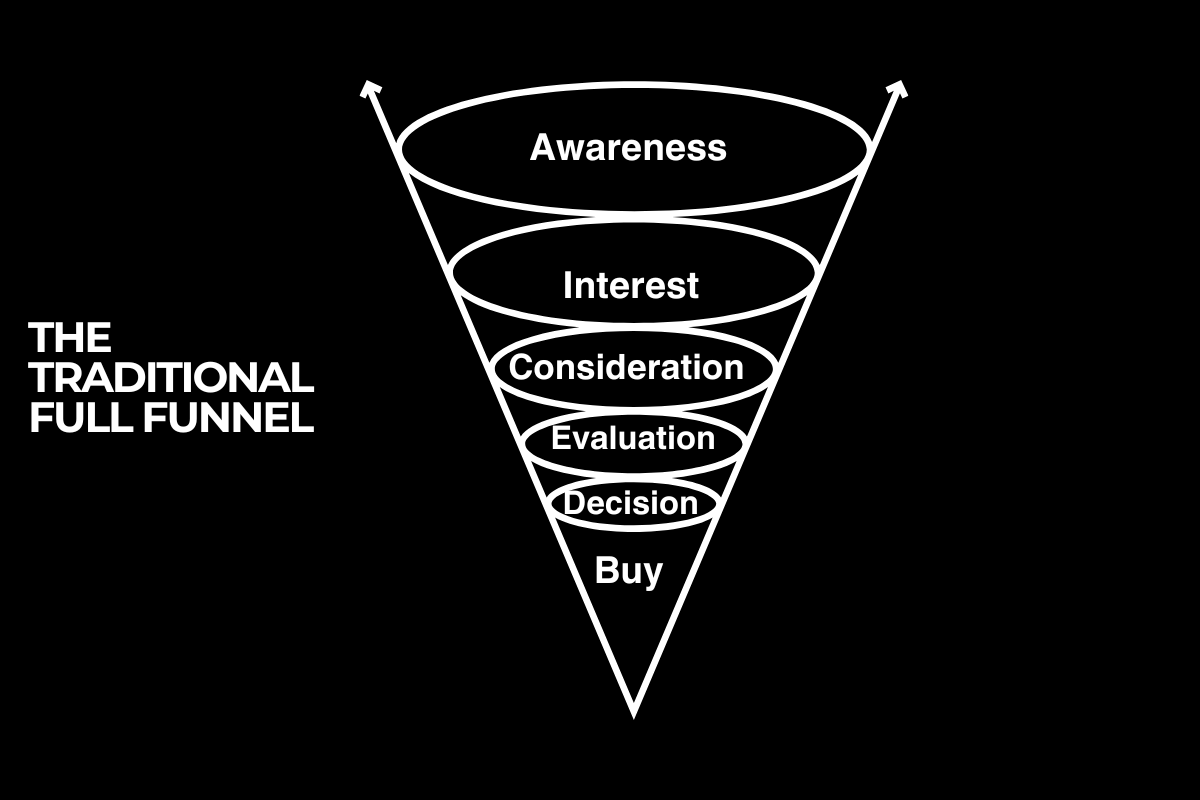
Traditional marketing funnels are tried and true, being widely accepted to bring transparency to marketing campaigns. The focus is on “buying stages” and less on the consumer with no after thought. Top of funnel is all about casting a wide net, grabbing attention with ads, blog posts, and social media. The middle gets a little more personal, nurturing leads with email sequences and targeted content. And finally, the bottom is where the magic happens like conversions and sales.
But here's the thing: the funnel is linear. It assumes that once a customer makes a purchase, your job is done. That's like saying once someone buys a car, they never need to come back for service or upgrades.
Uses: The best use case for a traditional funnels are to explain strategies and tactics in a simplified way. Bringing clarity to complex strategies with a direct stage tied to each tactic throughout the journy.
Benefits: Measurability, simplicity, and its linear straight forward nature covering every base that grows sales productivity, sales velocity, and point of sale marketing.
Best for: Small businesses and startups that focus on lead generation and first-time conversions like e-commerce, trades, or local services.
Ways to implement a full funnel marketing strategy:
- Top of Funnel (Awareness)
Goal: Get noticed by the right audience and start building familiarity.
Tactics:- Run local Facebook or Google Display ads to boost visibility.
- Publish SEO-driven blog posts answering common Calgary-specific questions.
- Use social videos, reels, or community sponsorships to introduce your brand.
- Middle of Funnel (Consideration)
Goal: Educate and convince prospects that your solution fits their needs.
Tactics:- Offer free resources (guides, webinars, demos) to show expertise.
- Share comparison charts, testimonials, and before/after examples.
- Use email nurturing sequences that build trust over time.
- Bottom of Funnel (Conversion)
Goal: Turn warm leads into paying customers.
Tactics:- Simplify checkout or booking forms.
- Add limited-time offers or first-time buyer incentives.
- Use retargeting ads to re-engage visitors who didn’t convert.
- Post-Purchase (Retention & Advocacy)
Goal: Turn first-time buyers into repeat customers and brand advocates.
Tactics:- Send thank-you emails and satisfaction surveys.
- Offer loyalty discounts or referral programs.
- Ask for Google reviews or social proof to use in future marketing.
The Hourglass Marketing Strategy

The Hourglass funnel works to understand consumer buying stages in more depth and contains many of the same premises of the funnel but widens into after sales and referrals.
The Hourglass takes things a step further by expanding the funnel to encompass the entire customer journey, before and after the sale. This model focuses on knowing, liking, trusting, trying, buying, repeating, and referring. It acknowledges that the customer journey doesn't end with a purchase; it's just the beginning. This forces you to think about how you can continue to engage and delight customers long after they've handed over their money. What can you do to encourage repeat purchases and referrals? How can you turn satisfied customers into loyal brand advocates?
Uses: Best used with more mature and dynamic business-customer relationships, where service, referrals, and repeat customers are at the heart of the strategy. Maximizes CLV, boosts satisfaction, best for longer adoption cycles, and increase word-of-mouth.
Benefits: Depth, holistic picture, used best with customer centric marketing strategies. Emphasizes adoption but measuring success attribution (what exactly raised sales) can be difficult.
Best for: With local and relationship based businesses think real estate, home services, fitness, products, or services. Ultimately the hourglass marketing strategy can be applied and used with any business thats customer centric or wants to work on becoming more customer centric.
Ways to implement the hourglass marketing strategy:
Goal: Get your name in front of the right audience.
Tactics:
- Optimize your Google Business Profile and collect local reviews.
- Post on local Facebook groups or Calgary community boards.
- Run geo-targeted ads with video intros that show who you are and what makes you different.
- Use local SEO (keywords like “plumber in Calgary” or “Calgary boutique salon”).
Goal: Build emotional connection and brand personality.
Tactics:
- Share authentic stories of your team, behind-the-scenes moments, local partnerships. think "build in public".
- Post relatable content that aligns with your audience’s lifestyle or values.
- Engage with followers directly and comment back, reply to DMs, show up as a human.
Goal: Prove credibility and reliability.
Tactics:
- Showcase testimonials, case studies, and before/after examples.
- Get featured in local media or collaborate with trusted local businesses.
- Offer transparent pricing, clear FAQs, and strong guarantees.
- Use consistent branding across all platforms because trust grows from familiarity.
Goal: Make purchasing seamless and low-risk.
Tactics:
- Simplify checkout, booking, or contact forms.
- Offer first-time buyer discounts or flexible payment options.
- Add urgency with limited-time offers (“Only 5 spots left this month!”).
- Use retargeting ads to remind interested users to complete their purchase.
Goal: Keep customers coming back for more.
Tactics:
- Launch a simple loyalty program (“Buy 5, get 1 free” or point-based rewards).
- Send personalized follow-ups or thank-you emails with product recommendations.
- Offer subscription or rebooking reminders (“Time for your next tune-up!”).
- Provide ongoing value through helpful content or exclusive deals.
Goal: Turn happy customers into advocates.
Tactics:
- Set up a referral program rewarding both referrer and friend.
- Encourage customers to leave reviews on Google or social platforms.
- Feature your customers on your social media or website (“Client of the Month”).
- Make it easy to share with offer “Share with a Friend” links in emails or SMS.
Choosing the Best Marketing Strategy for Your Business: Comparison of Strategies

So, which model is right for you? Honestly, it depends on your business, your goals, and your resources. The traditional Funnel can still be effective for businesses focused on short-term sales and lead generation. If you need to quickly acquire a large number of customers, the Funnel can be a good starting point.
But, if you're looking to build long-term relationships and sustainable growth, the Flywheel or the Hourglass are likely better choices. The Flywheel is ideal for businesses that thrive on word-of-mouth marketing and customer referrals. It emphasizes creating exceptional customer experiences that drive advocacy. The Hourglass, on the other hand, is a more comprehensive model that takes into account the entire customer journey, from initial awareness to long-term loyalty. It's particularly well-suited for businesses that sell complex products or services that require ongoing customer engagement.
What's really important to remember is to focus on full funnel marketing for small businesses. It's not enough to just get a customer through the door. How can you nurture them to become a regular customer?
Choose the Flywheel Model if Your Goal Is Sustainable Growth Through Customer Experience
The flywheel works best when your biggest asset is customer satisfaction. It’s all about building momentum, delighting customers so much that they bring others in through word-of-mouth and advocacy.
Best For:
- Service-based businesses
- Subscription or membership models
- Brands that rely on community or referrals
Why It Works:
It prioritizes customer experience over one-time transactions. The better you serve your existing customers, the faster your flywheel spins.
Ideal When You:
- Have an established customer base
- Want to improve retention and lifetime value
- Have strong word-of-mouth or repeat business
Example:
A fitness studio or spa in Calgary could use the flywheel to turn happy clients into promoters by offering referral rewards, personalized experiences, and consistent follow-up. The energy of satisfied customers keeps the business growing organically.
Choose the Funnel Model if Your Goal Is Growth Through New Leads and Conversions
The funnel is perfect for small businesses that are still building awareness or need a steady flow of new leads. It gives you a structured, measurable way to turn attention into revenue.
Best For:
- Startups or businesses entering a new market
- E-commerce stores and local service providers
- Companies needing a clear, step-by-step sales process
Why It Works:
It focuses on efficiency and bringing strangers in at the top and turning them into buyers at the bottom.
Ideal When You:
- Need predictable lead generation
- Are launching new products or offers
- Have limited time or budget and want measurable ROI
Example:
A local HVAC company in Calgary could use the funnel model to drive steady leads through Google Ads, a strong website, and follow-up emails. Every stage from “searching for a furnace repair” to “booking an appointment” is tracked and optimized.
Choose the Hourglass Model if Your Goal Is Long-Term Relationships and Repeat Revenue
The hourglass model (Know → Like → Trust → Buy → Repeat → Refer) is the most holistic approach. It focuses on the entire customer lifecycle before, during, and after the sale.
Best For:
- Relationship-driven businesses (real estate, salons, contractors, coaches)
- Brands that depend on loyalty, referrals, or repeat clients
- Any business that values long-term relationships over one-time transactions
Why It Works:
It balances both acquisition and retention, turning first-time buyers into lifelong fans.
Ideal When You:
- Already have some brand recognition and satisfied customers
- Want to build consistent recurring revenue
- Believe customer relationships are your best marketing tool
Example:
A Calgary realtor or home renovation company could thrive using the hourglass model by nurturing leads through education (Know, Like, Trust), guiding them to purchase, then staying in touch post-sale with maintenance tips and referral programs (Repeat, Refer).
Is Full Funnel Marketing Right for You?
Honestly, for most small businesses, the answer is a resounding yes. Even if you're just starting out, understanding the full customer journey and tailoring your marketing efforts accordingly can make a huge difference. You don't need a massive budget or a huge team to implement a full funnel strategy. Start small, focus on providing value, and watch your business grow.
Full funnel marketing isn't just a strategy; it's a mindset. It’s about understanding your customers, meeting them where they are, and guiding them on a journey towards becoming loyal fans of your brand. So, are you ready to take the plunge and unlock the power of full funnel marketing for your small business? The results might just surprise you.
Our Full Funnel Marketing Services for Calgary Businesses
At Minerva Marketing, we help Calgary small businesses build intuitive, high-performing full funnel marketing strategies that attract, convert, and retain customers all while keeping your brand human and authentic.
We don’t just run ads. We design customer journeys that turn strangers into loyal advocates. We not only focus on full funnel marketing but implement the best of all 3 marketing strategies to get your business results.
Our Full Funnel Marketing Services Include:
- Funnel Strategy & Mapping
We audit your customer journey, find the gaps, and build a funnel customized to your business goals and audience. - Multi-Channel Execution
From SEO to paid ads, social media, and email marketing. We align every touchpoint to guide customers naturally through each stage. - Retention & Loyalty Systems
We help you set up loyalty programs, referral systems, and follow-up sequences that keep customers coming back. - Performance Tracking & Optimization
Every campaign we build is data-backed and fully measurable. We don’t just launch. We test, tweak, and improve over time.
The Bottom Line
The bottom line for choosing an effective full marketing funnel strategy for your business is It's time to ditch the outdated linear approach and embrace a more customer-centric model. Whether you choose the Flywheel or the Hourglass, the key is to focus on creating exceptional experiences that drive customer loyalty and advocacy. So, are you ready to transform your marketing from a leaky bucket into a self-sustaining engine of growth? It's time to take action and make your marketing truly work for you.
Grow your business
Take the first step with a discovery call – no pressure, just strategy.